
ICT 2016 Unit 014: A Seven-Step Context Filter
Organize macro, medium-term and short-term evidence into a seven-step review filter, while keeping alignment separate from an entry signal.
An attractive pattern is not a complete decision. The seven-step filter in this unit organizes context before a learner studies a local trigger. It is a waiting framework, not an automatic route into a position.
Three layers of evidence
The source groups its questions as 2 + 2 + 3:
- Broad context: at least two of macro conditions, rate context, intermarket relationships and seasonality agree.
- Medium context: at least two of multi-timeframe structure, positioning data and sentiment agree.
- Short-term context: correlation or divergence, time/price context and liquidity observations all appear.
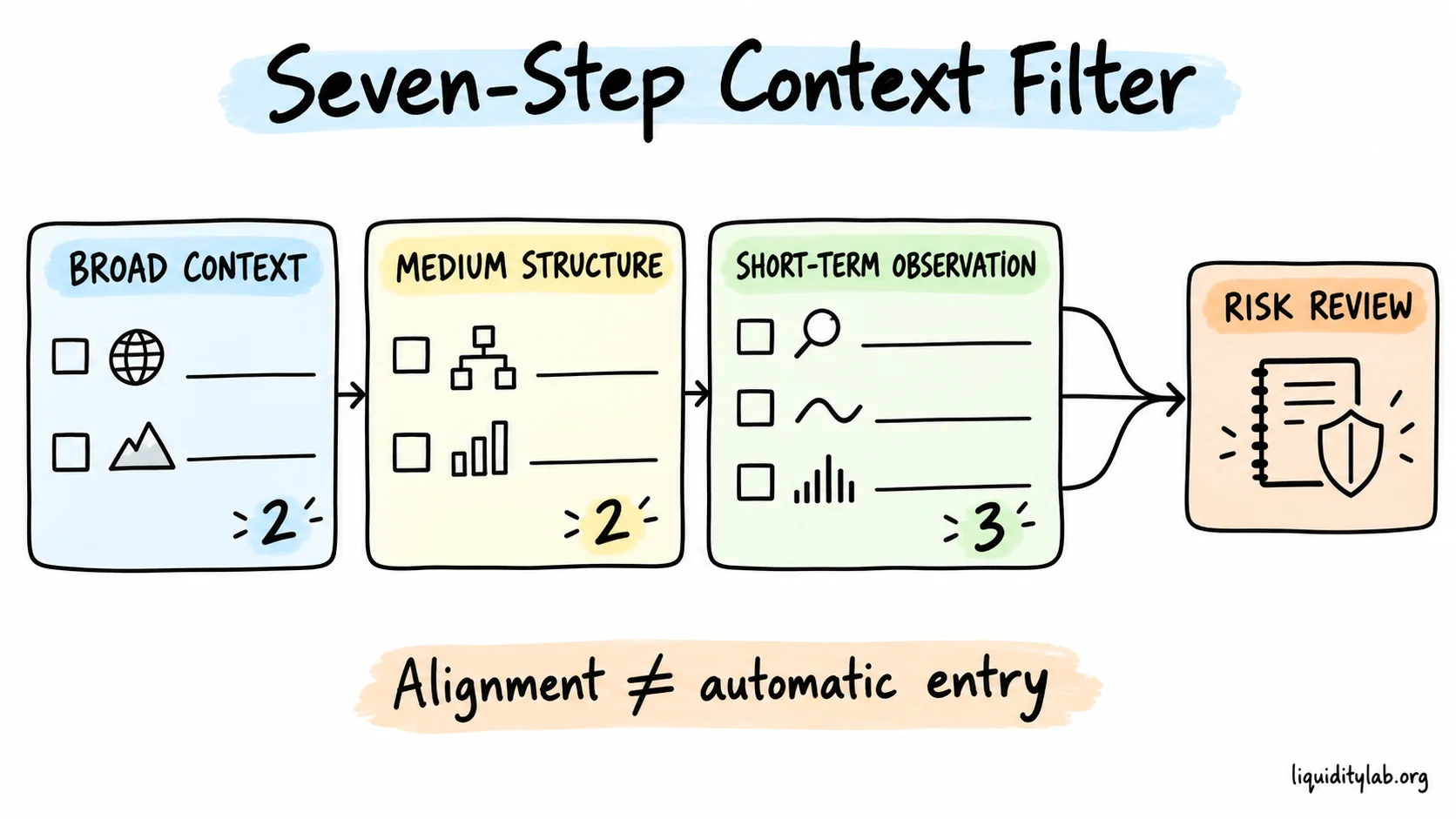
Alignment makes a case worth studying; it does not create an automatic entry.
Keep the checklist conditional
The count is a way to expose missing information. Macro data may conflict with structure; sentiment can change; a short-term divergence may fail. A full checklist still requires a separate invalidation, risk and exit review.
| Layer | Useful question |
|---|---|
| Broad | Which independent observations agree, and over what horizon? |
| Medium | Does the larger structure support or weaken that reading? |
| Short | Did the local event persist, return or remain unresolved? |
Review exercise
Choose a completed case and fill the seven fields before looking at the outcome. Mark missing or conflicting evidence instead of forcing a pass. Compare the result with a case where only one familiar signal was present.
Continue with Unit 015: False Breakouts and Visible Flags. The filter is educational organization, not an execution rule or performance promise.